
Top 10 Exterior Rendering Trends for 2026
Exterior rendering in 2026 is no longer about showing pretty façades. It’s evolving into a sophisticated blend of storytelling, data and emotion. From deep, earthy colour palettes and bold accents to layered materials, soft modernism and seamless indoor–outdoor connections, the article unpacks ten trends driving the field. Real‑time rendering, AI‑assisted workflows, cloud services, sustainability and immersive storytelling round out the innovations reshaping how architects, developers and marketers visualize projects.
Posted By
AndyPosted On
Jan 15, 2026
Introduction
Architectural visualization has always walked a fine line between art and technology. A century ago, hand‑drawn elevations and watercolors captured the essence of a building. Today we’re wielding powerful software and GPUs to create experiences so immersive that clients feel like they can step inside a project before the first brick is laid. As we head into 2026, exterior rendering is no longer just about pretty pictures; it’s about storytelling, data, and emotions. In this article we look at the top exterior rendering trends that will shape projects over the next year. Collectively, these Rendering Trends reflect how technology and aesthetics are converging to influence design choices. Whether you’re an architect looking for Modern exterior rendering ideas for architects, a developer planning a new community or a marketer eager to impress buyers, these trends can help you stay ahead.
1. Dark, Earthy Palettes and Bold Accents
White and pale gray façades have dominated housing for years, but 2026 brings a departure from “safe” colors. Designers are gravitating toward charcoal gray, near‑black and deep forest greens that provide a grounded, confident feel. These moody tones contrast beautifully with natural landscaping and warm wood accents, giving exteriors a sense of sophistication without feeling sterile. Rich neutrals and saturated earthy colors such as soft olives and buttery beiges are gaining traction. When paired with a bold front door or a statement accent, think mustard yellow, navy or terracotta, the result is memorable curb appeal that feels timeless yet fresh. For rendering artists this means investing in high‑quality color libraries and calibrating your monitors to ensure these subtleties translate accurately. Clients will expect to preview how a deep green looks under morning sun and evening shade, so capturing realistic color shifts and reflections will be vital.
2. Mixing Natural and Industrial Materials
One of the most noticeable Exterior 3D rendering trends 2026 is the combination of materials that traditionally belong to different worlds. Modern façades are now layering smooth wood planks with stone accents and metal trims. Even residential projects feature board‑formed concrete, black steel window frames and thermally modified wood. Sustainable composites made from recycled materials or fiber cement are also gaining popularity. From a rendering perspective, this diversity poses both a challenge and an opportunity: capturing the texture and interaction of light on each surface requires careful attention to the physical properties of materials. For Photorealistic exterior rendering techniques, using physically based rendering (PBR) materials with accurate roughness, reflectivity and bump maps is essential. When done correctly, a render will allow clients to virtually “feel” the contrast between smooth metal and weathered wood.
3. Soft Modernism: Curves, Arches and Vertical Lines
Modern architecture has long been synonymous with crisp right angles, but 2026 introduces a softer approach. Designers are reintroducing arches and gently curved walls, creating a form dubbed “soft modernism.” Graceful arches, large curved picture windows and subtly curved rooflines break up the rigidity of boxy volumes. To balance these organic forms, vertical siding and narrow windows draw the eye upward, making structures appear taller. Rendering these shapes convincingly requires more than just extruding geometry; it demands an understanding of how light wraps around a curve and how shadows soften along an arch. High‑quality subdivision modeling combined with smooth shading will help avoid faceted surfaces. Use depth‑of‑field and perspective controls to emphasize curves without distortion, and ensure your camera angles tell the story of these graceful forms.
4. Seamless Indoor‑Outdoor Living and the Porch Revival
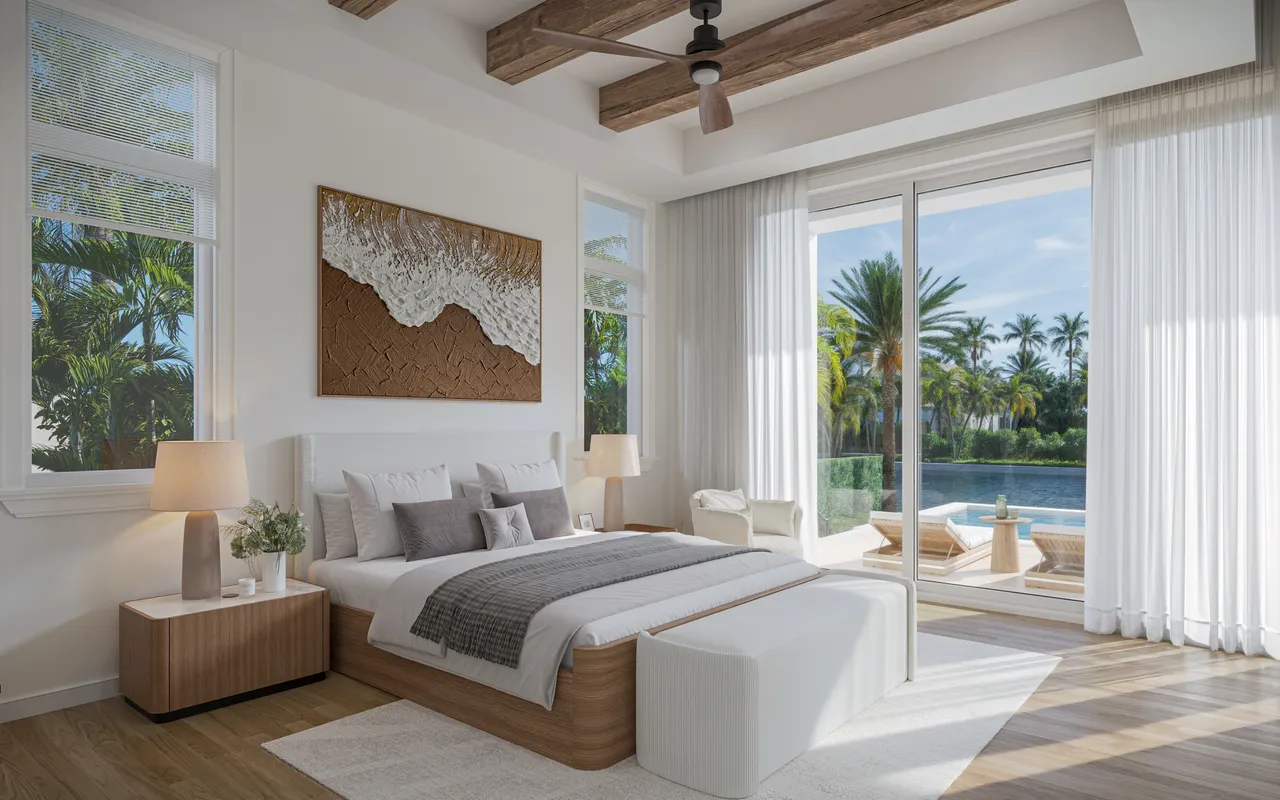
The boundary between inside and outside is disappearing. Floor‑to‑ceiling glass walls, multi‑panel sliding doors and bifold systems are becoming standard features as homeowners seek uninterrupted flow between living spaces and patios. At the same time, front porches are making a comeback; wide covered entries and cozy seating areas create welcoming spaces that extend hospitality to the street. For rendering artists, these trends mean more complex scenes: capturing reflections on glass, the interplay of interior lighting with natural daylight and the integration of landscape elements. When you create exterior renders for real estate marketing, remember to place your camera at human eye level to illustrate the connection between spaces and to populate scenes with people enjoying the porch or patio. This approach not only makes renders relatable but also addresses the common question of How to create realistic exterior renders.
5. Real‑Time Rendering and Immersive Experiences
Waiting hours, or days, for final renders is becoming a thing of the past. Thanks to GPU improvements and software like Unreal Engine, real‑time rendering allows clients to walk through a project and see changes instantly. Real‑time engines enable designers to swap materials, change lighting or even adjust the time of day during a meeting. Instead of static slides, architects can now hand clients a headset and let them explore the design like a video game. Buyers increasingly expect interactive features such as day‑to‑night sliders, weather options and camera paths they control. To embrace this trend, studios should integrate a real‑time engine into their workflow and train team members accordingly. It’s also wise to develop simplified models for VR/AR sessions to ensure smooth performance on consumer‑grade devices. Exterior rendering tips for real estate marketing now include creating VR tours that load quickly on an iPad as well as high‑resolution stills.
6. AI‑Driven Rendering and Generative Design
Artificial intelligence is reshaping how we model, texture and render. Machine learning algorithms can now transform rough sketches into detailed models and apply textures and lighting that look remarkably realistic. Generative design tools integrated with BIM data can auto‑populate rooms, propose façade options and even clean up messy geometry, reducing modeling time by nearly half. At the cutting edge are generative adversarial networks (GANs), which automatically produce detailed 3D models, textures and animations. While AI will not replace human artists, effective use of AI is one of 2026’s biggest differentiators. It can eliminate repetitive tasks and open up creative possibilities. To get the most out of AI, use it as a collaborator: let algorithms draft options and refine them manually. This hybrid approach ensures you maintain artistic control while benefitting from AI’s speed and pattern recognition.
7. Cloud‑Based Workflows and Democratization of Rendering
High‑quality rendering used to require expensive hardware, limiting access to large firms. Cloud rendering changes the equation by allowing small studios and freelancers to tap into remote servers on demand. With cloud solutions, creators can produce complex, high‑resolution renders without investing in new computers. This democratization of technology empowers emerging designers and small businesses to compete with larger studios. Cloud rendering also supports remote collaboration; teams can upload models and review drafts from anywhere, making it easier to iterate with clients and consultants spread across the globe. For architects and developers, this trend translates to faster turnaround times and more opportunities to experiment. When budgeting for projects, allocate resources for cloud rendering credits and choose platforms that integrate smoothly with your modeling and rendering software.
8. Sustainability and Eco‑Conscious Visualizations
Sustainability is not just a buzzword; it’s a requirement. Clients want to see how energy‑efficient systems and green materials will perform over time. Exterior renderings now incorporate data overlays showing solar panel output, natural ventilation paths and green roof growth across multiple years. In parallel, rendering processes themselves are becoming more eco‑friendly. Developers are optimizing algorithms and using energy‑efficient hardware to reduce the carbon footprint of visualization. On the design side, more projects are using recycled composites, fiber cement panels and natural landscaping to reduce maintenance and resource consumption. When producing renders, highlight these sustainable choices clearly: include realistic textures for composite siding, show rainwater harvesting systems and label energy dashboards. Transparent visualization not only helps sell environmentally conscious designs but also demonstrates how the building will perform.
9. Immersive Storytelling and Personalized Walkthroughs
Clients don’t want passive fly‑through videos anymore; they want to control the journey. New workflows let viewers adjust camera paths, toggle between seasons, add realistic weather conditions like rain or snow and see people who resemble their future neighbors. This level of personalization makes projects feel alive and fosters emotional connection. For rendering teams, the focus shifts toward building interactive user interfaces within the visualization. Instead of pre‑rendered clips, create parameter‑driven scenes where material, lighting and even furniture can be changed on the fly. If you’re working on a residential subdivision, give prospective buyers the ability to swap siding materials or paint colors in real time. This approach leverages Best practices for exterior rendering by ensuring that each change maintains realistic lighting and physical accuracy. It also addresses a common FAQ: how do I help my client visualize different design options quickly? The answer lies in interactive storytelling.
10. Photorealistic Exterior Rendering Techniques and Professional Tips
Regardless of technological advances, the pursuit of photorealism remains at the core of exterior rendering. Achieving it requires a disciplined workflow: start with an accurate 3D model built at real‑world scale, with clean topology and organized layers. Apply high‑resolution, properly UV‑mapped textures and PBR materials, and include subtle imperfections (scratches, smudges and wear) to avoid a plasticky look. Lighting is critical; position the sun to cast natural shadows (morning or late afternoon light works well) and balance brightness with soft fill lights. Camera placement should mimic a photographer’s approach, typically eye level for most shots, and avoid extreme wide angles that distort the view. Atmosphere adds depth; use volumetric lighting, fog or overcast skies judiciously to enhance mood. Don’t forget to check scale; undersized doors or oversized grass quickly ruin realism. Finally, round off edges (sharp corners rarely exist in reality) and polish the image in post‑production by adjusting color balance and contrast without overdoing filters. These Photorealistic exterior rendering techniques may sound like basics, but they account for most of the difference between a render that feels like a video game and one that convinces a client.
Actionable Takeaways
- Embrace Color and Texture. Experiment with dark, earthy palettes and rich neutrals while maintaining balance with natural and industrial materials. Use PBR textures to capture the realism of wood, metal and composites.
- Model for Soft Modernism. Incorporate curves, arches and vertical lines into your designs and learn how to light them effectively. Soft modernism is a subtle trend that resonates with clients who appreciate both tradition and innovation.
- Plan for Indoor–Outdoor Flow. When creating exterior renders for real estate marketing, show how spaces connect and populate scenes with people enjoying porches and patios. It brings warmth and relatability to your visuals.
- Invest in Real‑Time and VR. Adopt real‑time engines and VR/AR tools to provide clients with interactive experiences. Use day‑to‑night sliders and weather controls to tell a comprehensive story.
- Leverage AI Wisely. Use AI tools to generate options and automate repetitive tasks, but maintain artistic oversight. Generative design can dramatically speed up modeling and material selection.
- Utilize Cloud Rendering. Explore cloud rendering services to handle large scenes without upgrading your hardware. This not only shortens production times but also enables collaboration across geographies.
- Highlight Sustainability. Visualize energy performance, sustainable materials and eco‑friendly landscaping. Use data overlays to make environmental benefits tangible.
- Make Walkthroughs Interactive. Allow clients to control camera paths and toggle design options. Personalization enhances engagement and helps clients make decisions faster.
- Perfect the Fundamentals. Accurate modeling, realistic materials, thoughtful lighting and careful post‑processing remain the backbone of great renders. Don’t rush these steps even when AI accelerates other parts of the workflow.
- Tell a Story. Each render should communicate more than shapes and colors; it should convey lifestyle, comfort and aspiration. Use your renders to show not just what a building looks like but how it feels to live or work there.
Exterior rendering in 2026 sits at the intersection of creativity and technology. By mastering these trends and Best practices for exterior rendering, you’ll deliver visuals that inspire confidence, capture imaginations and drive better design decisions.
Frequently Asked Questions
Why are exterior rendering trends important for 2026?
Exterior rendering trends act as a barometer for where client expectations and technology are heading. Shifts toward dark, earthy palettes and bold accents signal a move away from sterile minimalism toward richer, more grounded façades. The pairing of natural and industrial materials shows that designers are embracing contrasts. On the technology side, real‑time rendering and interactive walkthroughs are becoming mainstream, while sustainability has moved from optional to mandatory. Keeping up with these trends ensures your visuals feel current and meet functional, environmental and regulatory expectations.
What are the top exterior rendering trends for 2026?
Our research points to ten standout trends. Design‑wise, deep neutrals and bold accents replace endless white; richly textured façades combine wood, stone, metal and composites. Soft modernism introduces curves, arches and vertical lines that lift the eye. Seamless indoor–outdoor connections and the revival of front porches blur boundaries between spaces. On the technical side, real‑time rendering lets clients explore designs instantly, AI accelerates modeling and generative design, and cloud services democratize high‑quality rendering. Sustainability comes to the fore, with visualizations illustrating energy performance and eco‑friendly materials. Immersive storytelling allows users to adjust seasons, weather and materials. Finally, photorealistic exterior rendering techniques, accurate models, realistic materials, thoughtful lighting and post‑processing, remain essential.
How can exterior 3D rendering improve real estate marketing?
High‑quality exterior 3D rendering turns flat plans into lifelike images that help investors, regulators and buyers understand a project long before construction. These visuals showcase a building’s façade, landscaping and how it integrates with its surroundings. Developers often secure reservations for units before breaking ground because renders highlight curb appeal and design vision. Interactive walkthroughs and day‑to‑night comparisons make marketing materials engaging and allow prospects to explore design options at their own pace. Accurate renders also streamline planning approvals and reduce design errors, saving time and money.
Which software is best for exterior rendering in 2026?
There is no single “best” tool, choose software that aligns with your workflow and goals. Offline renderers such as V‑Ray and Corona are industry standards for photorealism; they offer granular control over light, materials and sampling. Real‑time engines like Unreal Engine, Twinmotion and Lumion enable interactive presentations and rapid iterations. Hybrid tools such as D5 Render balance speed and quality, while AI‑powered platforms accelerate concept development. Ultimately, the right choice depends on whether you prioritize pixel‑perfect stills, immersive VR walkthroughs or rapid concept visualization. Industry guides note that tools like Lumion, V‑Ray and Corona remain popular for both exterior and interior rendering.
What is the difference between exterior and interior rendering?
Exterior rendering focuses on a building’s outer structure, showcasing its design, façade and how it fits into its surroundings. These visuals highlight landscaping and context and rely heavily on natural light and durable materials like glass and concrete. Interior rendering, by contrast, dives into room layouts, furniture and textures to convey how spaces will feel and function. Interiors use a mix of natural and artificial lighting and pay close attention to finer materials such as wood and fabric. In short, exteriors are about curb appeal and context, while interiors are about atmosphere and human scale.
Can I use exterior renders for architectural presentations?
Yes, exterior renders are invaluable for presentations, planning approvals and investor pitches. They showcase a building’s external design, landscaping and integration with its environment, which is exactly what decision‑makers need to see. Many developers use exterior visuals to pre‑sell units before construction and to secure reservations from buyers and investors. When preparing a presentation, choose high‑resolution renders that accurately depict materials and lighting, and consider adding interactive elements like day‑to‑night sliders or VR tours to engage your audience.
Ready to put these trends to work? Explore our 3D exterior rendering services or work with our Florida rendering studio
Related Content
Our 3D Rendering Services
See how Xrender Studio can bring your project to life, from exterior and interior renderings to animation and virtual tours.
Serving projects nationwide